奥克兰大学/University of Auckland
- 课程名称:
工程计算机Doctor of Philosophy (PhD) - Computer Systems Engineering
- 课程级别:博士学位/Doctoral Degree(10级)
- 课程代码:
- 学费:$6,970 NZD Per Year
- Masters-level qualification or the equivalent of a bachelors degree with honours
- GPE 5.5
- Evidence of significant research, usually undertaken as part of prior study

新西兰澳新教育集团
NAA International Education Gr...
新西兰澳新教育集团(NAA International Education Group LTD.)是经新西兰官方正规注册留学教育公司...
新西兰维特利亚理工学院官方授权
Whitireia New Zealand
新西兰维特利亚理工学院 Whitireia New Zealand
新西兰教育专家证书
Education New Zealand Trained ...
新西兰教育专家证书Education New Zealand Trained Agent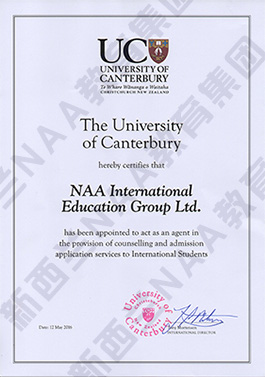
新西兰坎特伯雷大学官方授权
The University of Canterbury
新西兰坎特伯雷大学 The University of Canterbury-

-

- 学分:
- 开学时间:16-July-2018
- 申请截止:
- 授课校区:University of Auckland
- 课程信息:
Course details
Summary
The PhD is a globally recognised postgraduate research degree, the highest level of degree you can achieve. PhD students are critical, curious, creative thinkers who undertake original research over at least 3 years. As well as your supervised original research, through your doctoral programme you will have opportunities to expand and develop your personal and professional skills. Doctoral candidates present their work at local and international conferences, and are encouraged to network and collaborate with a wide range of experts in their research field.
This course is also offered at overseas and Manukau location.
Computer Systems Engineering
Even though this research area has existed for many decades, parallel computing is still challenging with many unsolved problems. The physical limits of processor technology and the resulting shift towards multi-core systems makes this area more relevant and important than ever. Our research includes, but is not limited to, the following topics:
Desktop parallelisation
Modern computer systems have more than one processor-core. To benefit from this processing power, we need to parallelise our programs. For desktop applications, like browsers, word processing etc, this mainly means that object oriented (OO) applications have to be parallelised.
Scheduling
Crucial for the efficiency of a parallel program is how the (sub)tasks of the program are mapped and ordered on the processors of the system. In task scheduling, the program is represented by a graph, where the nodes represent the tasks and the edges the communication between the tasks. The objective is then to find the best scheduling of this graph on the processors that allows the fastest execution of the program.
Reconfigurable computing
A reconfigurable hardware system constructed from FPGAs can provide much higher performance for certain applications than general purpose parallel systems. The advantage comes from the potentially much higher concurrency of many small processing elements that can work in parallel.
Visualisation and development tools
For fast and efficient development of programs, development tools are indispensable. Strangely though, there are not many powerful tools available for parallel programming, even though it is more involved and complex than sequential programming.
Programme structure
The University of Auckland PhD is a three-to-four year full-time advanced research degree.
On entry to the PhD programme, you will be enrolled provisionally. By the end of your first year, you must meet a number of goals to be confirmed into the PhD programme, including developing a full thesis proposal. After confirmation, you will continue to work on your research before submitting your thesis for examination after three years and within four years of your start date. The examination process includes an oral exam.
As part of your PhD study, you can take part in our doctoral skills programme, designed to help you achieve success in your research and develop skills for your future. We have a dedicated postgraduate careers advisor, and our library service includes specialist subject librarians to help you in your research. The central School of Graduate Studies provides dedicated support and advice for the doctoral community.
Where could this programme take you?
Our PhD graduates are successful in a wide range of fields and careers, as well as the traditional academic research career path. The PhD gives you extensive specialist and transferable skills, which are sought after in many sectors, including industry and government, and can even help you to develop entrepreneurship skills to run your own startup.
Entry criteria
English language requirements:
IELTS 6.5; TOEFL (iBT) 90; TOEFL (paper-based) 575; CAE or CPE 176; PTE 58; MELAB 85.
Course variations
16-July-2018 - Epsom Campus
= 新西兰小学申请问题集 =