奥克兰大学/University of Auckland
- 课程名称:
工程Doctor of Philosophy (PhD) - Electrical and Electronics Engineering
- 课程级别:博士学位/Doctoral Degree(10级)
- 课程代码:
- 学费:$6,970 NZD Per Year
- Masters-level qualification or the equivalent of a bachelors degree with honours
- GPE 5.5
- Evidence of significant research, usually undertaken as part of prior study
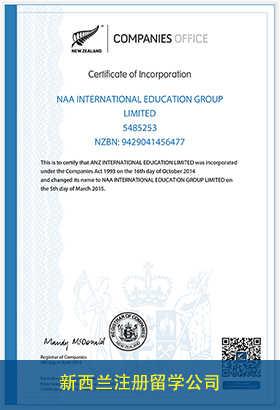
新西兰澳新教育集团
NAA International Education Gr...
新西兰澳新教育集团(NAA International Education Group LTD.)是经新西兰官方正规注册留学教育公司...
新西兰维特利亚理工学院官方授权
Whitireia New Zealand
新西兰维特利亚理工学院 Whitireia New Zealand
新西兰教育专家证书
Education New Zealand Trained ...
新西兰教育专家证书Education New Zealand Trained Agent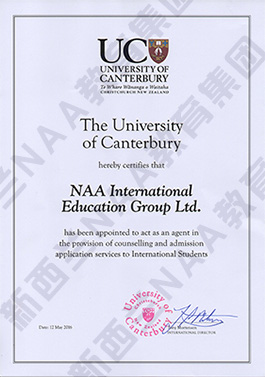
新西兰坎特伯雷大学官方授权
The University of Canterbury
新西兰坎特伯雷大学 The University of Canterbury-

-

- 学分:
- 开学时间:16-July-2018
- 申请截止:
- 授课校区:University of Auckland
- 课程信息:
Course details
Summary
The PhD is a globally recognised postgraduate research degree, the highest level of degree you can achieve. PhD students are critical, curious, creative thinkers who undertake original research over at least 3 years. As well as your supervised original research, through your doctoral programme you will have opportunities to expand and develop your personal and professional skills. Doctoral candidates present their work at local and international conferences, and are encouraged to network and collaborate with a wide range of experts in their research field.
This course is also offered at overseas and Manukau location.
Electrical and Electronics Engineering
Research areas
Engineering research takes us deeper into the understanding of how things work and enables us to develop new technologies. Our department has a number of research areas. Visit each one to find out more about what we're currently focusing on.
Power electronics: Best known as a world leader in the area of inductive power transfer (IPT) research.
Power systems: Focusing on integration of distributed/renewable energy sources to electricity power system with emphasis on protection, economics & innovations.
Systems and control: Research focuses on robust multivariable control, bit stream and networked control, fault tolerant systems, nonlinear system identification, fault diagnosis.
Telecommunications and electromagnetic: Research in this area focuses on areas of interest involving radio systems and microwave engineering and electromagnetic.
Forensics and biometrics
Parallel and reconfigurable computing: High performance computing from the desktop PC to the supercomputer, exploiting multicore processors, FPGAs, clusters are just some of the research interests in this area.
Embedded systems: The main focus is on semiconductor-based systems enabling emerging implementation technologies such as nano-mechanical and biological systems.
Software Engineering Processes, Tools and Applications (SEPTA): Research topics range from empirical studies of human and social aspects of software engineering, with emphasis on Agile methods such as Scrum and XP, to more technical topics.
Robotics: Research ranges from the psychology of human robot interaction to robotic programming systems, with applications in areas such as healthcare and agriculture.
Programme structure
The University of Auckland PhD is a three-to-four year full-time advanced research degree.
On entry to the PhD programme, you will be enrolled provisionally. By the end of your first year, you must meet a number of goals to be confirmed into the PhD programme, including developing a full thesis proposal. After confirmation, you will continue to work on your research before submitting your thesis for examination after three years and within four years of your start date. The examination process includes an oral exam.
As part of your PhD study, you can take part in our doctoral skills programme, designed to help you achieve success in your research and develop skills for your future. We have a dedicated postgraduate careers advisor, and our library service includes specialist subject librarians to help you in your research. The central School of Graduate Studies provides dedicated support and advice for the doctoral community.
Where could this programme take you?
Our PhD graduates are successful in a wide range of fields and careers, as well as the traditional academic research career path. The PhD gives you extensive specialist and transferable skills, which are sought after in many sectors, including industry and government, and can even help you to develop entrepreneurship skills to run your own startup.
Entry criteria
English language requirements:
IELTS 6.5; TOEFL (iBT) 90; TOEFL (paper-based) 575; CAE or CPE 176; PTE 58; MELAB 85.
Course variations
16-July-2018 - Epsom Campus
= 新西兰小学申请问题集 =