奥克兰大学/University of Auckland
- 课程名称:
Master of Arts (MA) in Linguistics
- 课程级别:硕士学位/Master's Degree(9级)
- 课程代码:
- 学费:$35,227 NZD Per Year
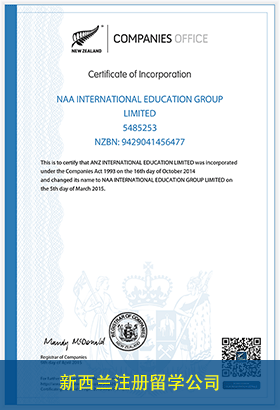
新西兰澳新教育集团
NAA International Education Gr...
新西兰澳新教育集团(NAA International Education Group LTD.)是经新西兰官方正规注册留学教育公司...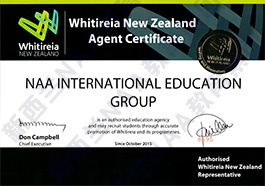
新西兰维特利亚理工学院官方授权
Whitireia New Zealand
新西兰维特利亚理工学院 Whitireia New Zealand
新西兰教育专家证书
Education New Zealand Trained ...
新西兰教育专家证书Education New Zealand Trained Agent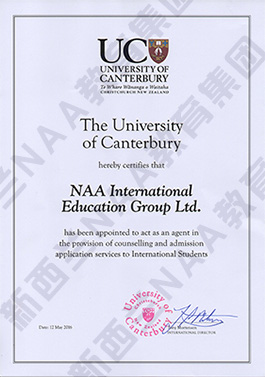
新西兰坎特伯雷大学官方授权
The University of Canterbury
新西兰坎特伯雷大学 The University of Canterbury-

-

- 学分:
- 开学时间:16-July-2018
- 申请截止:
- 授课校区:University of Auckland
- 课程信息:
Course details
Summary
Engage in advanced scholarship and contribute your own research to the existing knowledge in your field.
In a research masters you can contribute to the existing knowledge in your field by defining and managing a research project alongside some of New Zealand’s leading scholars.
In a taught masters you can deepen your knowledge in small classes with these leading scholars and complete a smaller research project such as a dissertation.
Linguistics
Our capacity for language sets us apart from other species, and is an important part of our national and ethnic identities. The heart of Linguistics is the study of the structure of human languages. Linguistics also examines their history and the ways in which they change the acquisition of language and the role language plays in human interaction. Linguistics is connected to any discipline concerned with human communication, languages and literature, as well as anthropology, artificial intelligence, human biology, philosophy, psychology and sociology.
Applied Language Studies and Linguistics offers a comprehensive postgraduate programme in Linguistics. You can study the following topics within Linguistics.
Language as code
This aspect of Linguistics examines grammatical systems, the meanings that are encoded in lexical items, phrases and clauses, and sound systems.
The social contexts of language
You can examine the status and use of different languages in a single society and the use of standard and non-standard language. We study the role language plays in personal and social identity, the place of language in social and cultural capital, and the key role of language in education and employment.
Language acquisition and change
Other Linguistics courses deal with the acquisition of language by children and the ways in which languages change over time.
Linguistic theory
We cover all the main areas of linguistic theory: syntax, phonology, historical linguistics, language contact, semantics, pragmatics, discourse analysis and sociolinguistics. Research methodology is an important aspect.
Linguistics and your career
You could use your knowledge and skills in fields such as language education, language policy, artificial intelligence, voice synthesis, speech pathology, audiology, translating and interpreting, and the automatic processing of documents.
Required course of study
120-point (one-year) MA
The 120-point MA requires one year of full-time study, with admission from a BA(Hons) or PGDipArts. It is available as either a research or taught masters.
240-point (two-year) MA
The 240-point MA requires two consecutive years of full-time study, with admission from a BA or approved equivalent qualification. It is available as either a research or taught masters.
Further study options
Doctor of Philosophy
Master of Arts Other Subjects: Ancient History, Anthropology, Applied Linguistics, Art History, Asian Studies, Chinese, Criminology, Development Studies, Drama, Economics, Education, Employment Relations and Organization Studies, English, French, Gender Studies, Geography, German, Greek, History, Italian, Japanese, Languages and Literature, Latin, Logic and Computation, 毛利 Studies, Mathematics, Media, Film and Television, Museums and Cultural Heritage, Music, 毛利 Studies, Pacific Studies, Philosophy, Politics and International Relations, Psychology, Screen Production, Sociology, Spanish, Statistics, Translation Studies.
Entry criteria
Admission for 120-point (1 year) programme: applicants must have completed a BA(Hons) or PGDipArts in Linguistics with an average grade of B or higher. Admission for 240-point (2 years) programme: applicants must have completed a BA with a major in Linguistics. They must have an average grade of B or higher in at least 45 points above Stage II in the major.
English language requirements:
IELTS 7.0; TOEFL (iBT) 100; TOEFL (paper-based) 600; CAE or CPE 185; PTE 65; MELAB 90.Course variation
16-July-2018 - University of Auckland
= 新西兰小学申请问题集 =