奥克兰大学/University of Auckland
- 课程名称:
Bachelor of Science (BSc) - Medicinal Chemistry Major
- 课程级别:学士学位/Bachelor's Degree(7级)
- 课程代码:
- 学费:$33,688 NZD Per Year
- 学分:
- 开学时间:16-July-2018
- 申请截止:
- 授课校区:University of Auckland
- 课程信息:
- Bachelor of Science (Honours)
- Graduate Diploma in Science (GradDipSci)
- Postgraduate Diploma in Science (PGDipSci)
- Master of Science (MSc)
- Doctor of Philosophy (PhD)
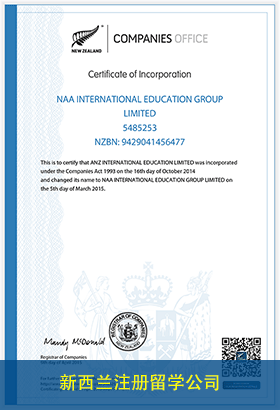
新西兰澳新教育集团
NAA International Education Gr...
新西兰澳新教育集团(NAA International Education Group LTD.)是经新西兰官方正规注册留学教育公司...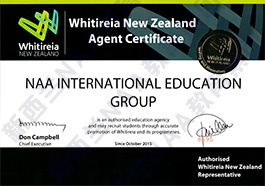
新西兰维特利亚理工学院官方授权
Whitireia New Zealand
新西兰维特利亚理工学院 Whitireia New Zealand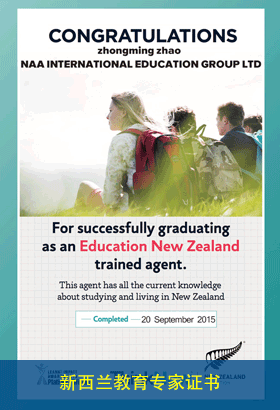
新西兰教育专家证书
Education New Zealand Trained ...
新西兰教育专家证书Education New Zealand Trained Agent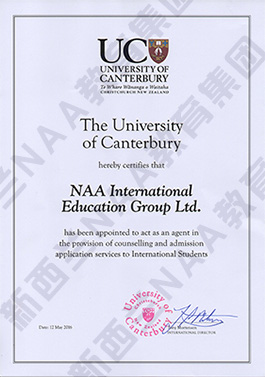
新西兰坎特伯雷大学官方授权
The University of Canterbury
新西兰坎特伯雷大学 The University of Canterbury-

-

Course details
Summary
With so many options to choose from, the Bachelor of Science degree (BSc) is your opportunity to create a good foundation for your study in the Earth, Chemical, Computational, Human, Life, Mathematical and Physical Sciences.
Programme overview
If you have a mind for science and you’re keen to keep your options open, then the BSc is the degree for you. With many undergraduate majors in a wide range of subject areas, the BSc will allow you to incorporate different areas of interest and expertise. As well as strongly emphasizing transferable skills to improve your employment opportunities, this programme will expose you to cutting-edge technologies and provide a gateway to independent research. Throughout your undergraduate degree you’ll be taught by knowledgeable scientists, many of whom are major contributors in their field.
Medicinal Chemistry Major
Medicinal Chemistry is one of the most rapidly developing areas within the discipline of Chemistry, both globally and locally. It is the study of the design, biochemical effects, regulatory and ethical aspects of drugs for the treatment of disease. The aim of this programme is to produce graduates with an appropriate background in biology and pharmacology, built upon a strong chemistry foundation.
Medicinal Chemistry at undergraduate level is designed to equip students with a strong grounding in biological and chemical techniques that are relevant to the pharmaceutical world.
Career opportunities
The students completing this multidisciplinary degree programme will have a unique combination of skills: they will be trained in the synthesis, reactivity and analysis of organic compounds and gain valuable insight into the pharmacological, regulatory and ethical aspects of these bioactive compounds.
Graduates tend to find employment in a wide range of institutions such as hospitals, biomedical and pharmaceutical companies, private research institutions, local and national government authorities and agencies and Crown Research Institutes. A large number of emerging spin off and venture capital pharmaceutical companies also seek staff in this area.
Further study options
Structure
Year I
Semester 1
BIOSCI 101
BIOSCI 107
CHEM 110
15 points from COMPSCI 111, STATS 101, PHYSICS 120, or 160
Semester 2
BIOSCI 106
MEDSCI 142
CHEM 120
15 points from a General Education course
Year II
90 points: BIOSCI 201, 203, CHEM 230, 240, MEDSCI 204, 205
At least 15 points from BIOSCI 202, 204, CHEM 210, 220, MEDSCI 202, 203, PHARMACY 202
Year III
60 points: CHEM 330, 390, 392, MEDSCI 303
At least 30 points from CHEM 320, 340, 350, BIOSCI 349–356, MEDSCI 206, 305, 306
Entry criteria
Secondary school qualifications
You need to have one of the following: International Baccalaureate Diploma with a minimum total score of 24. General Certificate of Education (GCE) Advanced Level. You must have completed a minimum of three A-Level subjects with at least a 'C' grade or higher. General Studies or similar general papers cannot be included.
GCE ‘A’ Level requirements apply to ‘A’ Level qualifications examined by bodies such as AQA, OCR, Edexcel, WJEC, CCEA, Pearson Education Limited and CIE taken outside of New Zealand.
English language requirements:
IELTS 6.0; TOEFL (iBT) 80; TOEFL (paper-based) 550; CAE or CPE 169; PTE 50; MELAB 80.
Course variations
16-July-2018 - Tamaki Innovation Campus
= 新西兰小学申请问题集 =