奥克兰大学/University of Auckland
- 课程名称:
Bachelor of Science (BSc) - Pharmacology Major
- 课程级别:学士学位/Bachelor's Degree(7级)
- 课程代码:
- 学费:$33,688 NZD Per Year
- 学分:
- 开学时间:16-July-2018
- 申请截止:
- 授课校区:University of Auckland
- 课程信息:
- Bachelor of Science (Honours)
- Graduate Diploma in Science (GradDipSci)
- Postgraduate Diploma in Science (PGDipSci)
- Master of Science (MSc)
- Doctor of Philosophy (PhD)
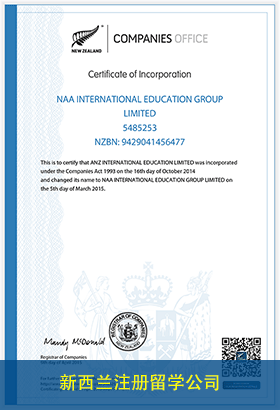
新西兰澳新教育集团
NAA International Education Gr...
新西兰澳新教育集团(NAA International Education Group LTD.)是经新西兰官方正规注册留学教育公司...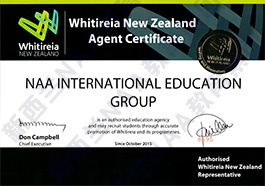
新西兰维特利亚理工学院官方授权
Whitireia New Zealand
新西兰维特利亚理工学院 Whitireia New Zealand
新西兰教育专家证书
Education New Zealand Trained ...
新西兰教育专家证书Education New Zealand Trained Agent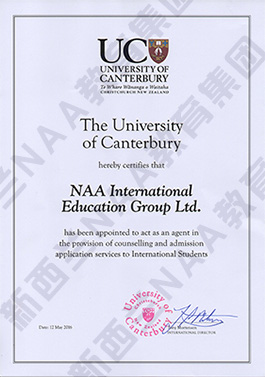
新西兰坎特伯雷大学官方授权
The University of Canterbury
新西兰坎特伯雷大学 The University of Canterbury-

-

Course details
Summary
With so many options to choose from, the Bachelor of Science degree (BSc) is your opportunity to create a good foundation for your study in the Earth, Chemical, Computational, Human, Life, Mathematical and Physical Sciences.
Programme overview
If you have a mind for science and you’re keen to keep your options open, then the BSc is the degree for you. With many undergraduate majors in a wide range of subject areas, the BSc will allow you to incorporate different areas of interest and expertise. As well as strongly emphasizing transferable skills to improve your employment opportunities, this programme will expose you to cutting-edge technologies and provide a gateway to independent research. Throughout your undergraduate degree you’ll be taught by knowledgeable scientists, many of whom are major contributors in their field.
Pharmacology Major
Modern pharmacology developed from the concept that particular chemicals are biologically active and can be used to modify, cure or prevent illness. In practice, this requires a detailed understanding of both how the body functions (physiologically and biochemically) and the problems which can occur (functional disturbances and pathology). By determining cellular and chemical abnormalities of the disease state, it is at least theoretically possible to design molecules to correct problems that arise. Toxicology is closely related to Pharmacology but specializes in the study of harmful effects of drugs and other chemicals on biological systems.
Career opportunities
The subjects of Pharmacology and Toxicology are of great practical and commercial relevance in view of the widespread use and abuse of medicines, drugs and chemicals in modern society. Their future expansion appears assured as there remain many illnesses (AIDS, cancer, even the common cold) for which satisfactory cures have not yet been devised. In addition, industrial, chemical and pharmaceutical developments, environmental contamination, and illicit drug use will continue to present significant health hazards to the general population.
With further study in Pharmacology you could teach or conduct research in higher education institutions, work in the pharmaceutical industry, research and develop new medicines, conduct clinical research, work in regulatory and marketing divisions of industry, or develop chemicals. Other fields may include safety aspects of chemicals (used in food processing and agricultural industries) and the assessment of the safety of medicines, employment in hospitals, careers in medical editing, abstracting and publishing, and environmental toxicology.
Further study options
Structure
Single or first major must include:
At least 60 points from MEDSCI 303-307
Second major must include:
At least 45 points from MEDSCI 303-307
Entry criteria
Secondary school qualifications
You need to have one of the following: International Baccalaureate Diploma with a minimum total score of 24. General Certificate of Education (GCE) Advanced Level. You must have completed a minimum of three A-Level subjects with at least a 'C' grade or higher. General Studies or similar general papers cannot be included.
GCE ‘A’ Level requirements apply to ‘A’ Level qualifications examined by bodies such as AQA, OCR, Edexcel, WJEC, CCEA, Pearson Education Limited and CIE taken outside of New Zealand.
English language requirements:
IELTS 6.0; TOEFL (iBT) 80; TOEFL (paper-based) 550; CAE or CPE 169; PTE 50; MELAB 80.
Course variations
16-July-2018 - Tamaki Innovation Campus
= 新西兰小学申请问题集 =